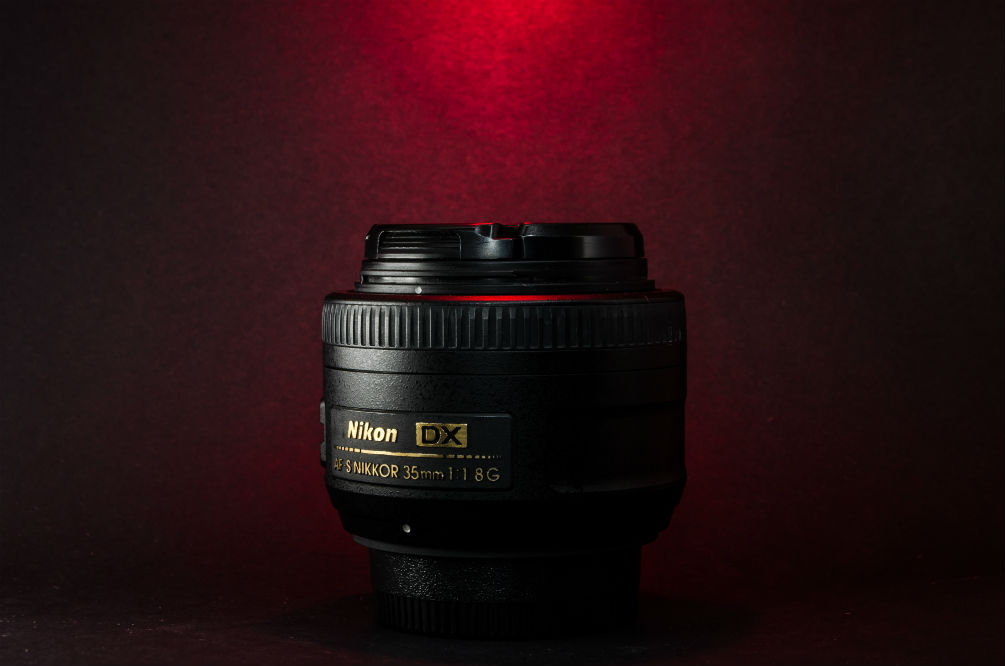
A prime lens does one thing: it shoots at a single focal length. You give up zooming, and in return you get a brighter maximum aperture, a smaller and lighter lens, and often sharper images for the money. If you shoot Nikon, there’s a strong prime for nearly every job, whether you’re on a Z-series mirrorless body or still using an F-mount DSLR.
This guide covers the best Nikon prime lenses available in 2026, organized by what you shoot. After that, it explains what a prime lens is and how to choose the right one for your camera.
Best Nikon Prime Lenses at a Glance
| Best for | Z-mount (mirrorless) | F-mount (DSLR) |
|---|---|---|
| Everyday / first prime | NIKKOR Z 40mm f/2 | AF-S NIKKOR 50mm f/1.8G |
| Sharpest standard lens | NIKKOR Z 50mm f/1.8 S | AF-S NIKKOR 50mm f/1.8G |
| Portraits | NIKKOR Z 85mm f/1.8 S | AF-S NIKKOR 85mm f/1.8G |
| Wide / travel on a budget | NIKKOR Z 28mm f/2.8 (SE) | n/a |
| Landscapes / low-light wide | NIKKOR Z 24mm f/1.8 S | n/a |
| DX / APS-C bodies | NIKKOR Z DX 24mm f/1.7 | AF-S DX NIKKOR 35mm f/1.8G |
Prices below are approximate US list prices as of October 2026. Retailers regularly sell them for less.
Best Nikon Z-Mount Prime Lenses (Mirrorless)
1. NIKKOR Z 40mm f/2 — Best First Prime
This is the easiest prime to recommend to anyone new to Nikon’s Z system. It’s a small, light full-frame lens with a bright f/2 aperture, and at about $280 it costs less than most kit-lens upgrades. A 40mm focal length sits between wide and normal, so it handles street, travel, food, and everyday shooting without needing to swap lenses.
Check the NIKKOR Z 40mm f/2 on Amazon
2. NIKKOR Z 50mm f/1.8 S — Best Standard Prime
The “nifty fifty” in Nikon’s premium S-Line. It’s larger than the 40mm f/2, but it’s built to S-Line optical standards and is widely regarded as one of the sharpest 50mm lenses at its price. Nikon lists it at about $570, and it’s commonly found under $500. If you want one do-it-all prime and image quality matters more than size, this is it.
Check the NIKKOR Z 50mm f/1.8 S on Amazon
3. NIKKOR Z 85mm f/1.8 S — Best for Portraits
85mm is the classic portrait focal length. It gives flattering facial proportions and lets you work at a comfortable distance from your subject. This S-Line lens pairs an f/1.8 aperture with 9 rounded aperture blades for smooth background blur, and it takes 67mm filters. It’s about $800 at list, and it’s the go-to portrait prime in Nikon’s Z lineup below the much pricier f/1.2 models.
Check the NIKKOR Z 85mm f/1.8 S on Amazon
4. NIKKOR Z 28mm f/2.8 (SE) — Best Budget Wide Prime
A compact, retro-styled full-frame wide angle that costs around $300. The f/2.8 aperture isn’t as bright as the S-Line lenses, but 28mm is a versatile focal length for travel, street, and environmental shots. The lens is small enough to leave on the camera all day.
Check the NIKKOR Z 28mm f/2.8 (SE) on Amazon
5. NIKKOR Z 24mm f/1.8 S — Best for Landscapes and Low-Light Wide Shots
For landscapes, architecture, interiors, and night skies, this S-Line wide prime combines a bright f/1.8 aperture with dust and drip resistance and a 72mm filter thread. At roughly $900–$1,000 it’s the priciest pick here, and it’s built for photographers who shoot wide most of the time.
Check the NIKKOR Z 24mm f/1.8 S on Amazon
6. NIKKOR Z DX 24mm f/1.7 — Best Prime for DX (APS-C) Z Cameras
On DX-format Z bodies like the Z50 II, Z30, and Zfc, this lens frames like a 36mm lens on full frame, a natural everyday view. The f/1.7 aperture is great for low light and background blur, and it focuses as close as about 7 inches. It’s about $280.
Check the NIKKOR Z DX 24mm f/1.7 on Amazon
Best Nikon F-Mount Prime Lenses (DSLR)
If you’re still shooting a Nikon DSLR, these three primes remain the standard picks. All three are AF-S lenses, which means they autofocus on every modern Nikon DSLR. They also keep full autofocus if you later move to a Z body with Nikon’s FTZ adapter.
AF-S NIKKOR 50mm f/1.8G — Best Value Prime
The go-to first prime for Nikon DSLR owners: bright, light, and inexpensive. On a full-frame (FX) body it’s a natural standard lens. On a DX body it frames like a 75mm lens, which makes it a great short portrait lens. Read our full Nikon 50mm f/1.8G review.
Check the AF-S NIKKOR 50mm f/1.8G on Amazon
AF-S NIKKOR 85mm f/1.8G — Best DSLR Portrait Prime
The F-mount counterpart to the Z 85mm above. It’s a fast, relatively affordable portrait lens for full-frame Nikon DSLRs, and it takes 67mm filters.
Check the AF-S NIKKOR 85mm f/1.8G on Amazon
AF-S DX NIKKOR 35mm f/1.8G — Best Prime for DX DSLRs
Made for DX-format DSLRs like the D3500, D5600, and D7500. It frames like a 52.5mm lens on full frame, giving a natural everyday view, and the f/1.8 aperture is a big step up from a kit zoom in low light.
Check the AF-S DX NIKKOR 35mm f/1.8G on Amazon
What Is a Prime Lens?
A prime lens has a single, fixed focal length (50mm, for example). A zoom lens covers a range, like 24-70mm. Nikon makes primes for both its Z mirrorless mount and its older F mount for DSLRs. Third-party makers such as Sigma, Tamron, and Viltrox also offer Nikon-mount primes.
Why Choose a Prime Over a Zoom?
1. More light. Primes typically have wider maximum apertures (f/1.8 or f/2, compared with f/3.5–5.6 on most kit zooms). That lets more light reach the sensor, so you can use faster shutter speeds and lower ISO in dim light.
2. Shallower depth of field. A wide aperture lets you keep your subject sharp while blurring the background, the look most people want for portraits.
3. Smaller, lighter, and good value. Without zoom mechanics, primes are usually more compact. Affordable options like the Z 40mm f/2 or AF-S 50mm f/1.8G cost far less than a zoom with a similar aperture.
The trade-off: you can’t zoom. To change your framing you move your feet, or carry a second lens.
How to Choose the Right Nikon Prime Lens
1. Match the mount to your camera. Z-series mirrorless cameras use Z-mount lenses. Nikon DSLRs use F-mount lenses. F-mount lenses can be used on Z cameras with Nikon’s FTZ or FTZ II adapter, and AF-S, AF-P, and AF-I lenses keep full autofocus that way. Z-mount lenses can’t be used on DSLRs. See our guide on whether Nikon lenses are universal.
2. Know your sensor size. Nikon’s DX (APS-C) sensors have a 1.5x crop factor, so a lens frames tighter on DX than on full frame (FX). A 35mm lens on DX looks like about 52.5mm on full frame. DX lenses are designed for DX bodies. FX lenses work on both.
3. Pick a focal length for what you shoot. These are full-frame equivalents:
- Ultra-wide (14–20mm): big landscapes, interiors, night sky
- Wide (24–35mm): landscapes, travel, street, environmental portraits
- Standard (40–50mm): everyday shooting, close to how your eyes see a scene
- Short telephoto (85–105mm): portraits and headshots
- Telephoto (135mm and up): tighter portraits, sports, and wildlife at a distance
4. Decide how fast a lens you need. “Fast” means a wide maximum aperture, shown as a lower f-number (f/1.8 is faster than f/2.8). Faster lenses are better in low light and for background blur, but they’re usually bigger and pricier. For daylight shooting, a slower, cheaper lens may be all you need.
5. Set your budget. The Z 40mm f/2, Z 28mm f/2.8 (SE), Z DX 24mm f/1.7, and AF-S 50mm f/1.8G all sit around $300 or less. S-Line primes like the Z 50mm f/1.8 S and Z 85mm f/1.8 S cost more but deliver Nikon’s best optics short of its f/1.2 flagships.
Frequently Asked Questions
Are Nikon prime lenses worth it?
For most photographers, yes. Even an inexpensive prime like the Z 40mm f/2 or AF-S 50mm f/1.8G gathers far more light than a kit zoom and produces noticeably blurrier backgrounds. That makes a prime one of the most cost-effective upgrades you can buy.
Can I use F-mount Nikon primes on a Z camera?
Yes, with Nikon’s FTZ or FTZ II mount adapter. AF-S, AF-P, and AF-I lenses keep autofocus on Z bodies. Older AF-D “screw-drive” lenses work only in manual focus on Z cameras.
What is the best first prime lens for Nikon?
On a full-frame Z camera, the NIKKOR Z 40mm f/2 is the easiest starting point for the price. On a DX Z camera, choose the Z DX 24mm f/1.7. On a Nikon DSLR, it’s the AF-S 50mm f/1.8G (full frame) or the AF-S DX 35mm f/1.8G (DX).
Related Reading
- What Lens to Use for Portraits
- Which Nikon Lenses to Buy
- Which Nikon Lenses Are Full Frame?
- What Nikon Lens Abbreviations Mean
Conclusion
The right Nikon prime depends on your mount, your sensor, and what you shoot. On Z mirrorless, the NIKKOR Z 40mm f/2 is the best first prime. The Z 50mm f/1.8 S is the sharpest everyday choice, and the Z 85mm f/1.8 S is the portrait specialist. On a DSLR, the AF-S 50mm f/1.8G is still one of the best-value lenses Nikon has ever made. Start with one prime that matches how you shoot most often, and you’ll feel the difference right away.